

2am Anxiety and Sleep: Why Your Brain Lies to You at Night


Picture this......
You’re lying on the bathroom floor, stomach bug in full swing.
You can’t eat.
You can’t keep anything down.
Your body has temporarily shut down one of its most basic functions.
But here’s what you don’t do.
You don’t lie there thinking:
what if I never eat again?
What if my body has forgotten how to digest food?
What if this is permanent?
You don’t panic.
You just wait it out.
Because somewhere, deep in your bones, you trust that your body knows what it’s doing. It’s just temporarily offline.
Now think about what happens after one bad night’s sleep.
By 2am you’re already six months ahead. You’re catastrophising tomorrow’s meeting, next week’s presentation, your health, your relationships, your entire functioning capacity as a human being. You’re absolutely convinced that something is permanently broken.
That asymmetry is the whole problem. And it’s the thing I want to talk about today.
2am Anxiety and Sleep: the reason
There’s actually a neurological reason why everything feels catastrophic at 2am. Why does 2am anxiety and sleep feel so overwhelming?
It’s not weakness, and it’s not irrationality.
Your prefrontal cortex, the part of your brain responsible for perspective and rational thought, is significantly compromised when you’re sleep-deprived and hyperaroused. It can’t do its job properly.
So your nervous system is running the show. And your nervous system, when it perceives threat, doesn’t do nuance.
Everything feels permanent.
Everything feels urgent.
Everything feels catastrophic.
The thought that woke you up at 2am and felt like the most important thing in the world?
By 9am it’s mildly embarrassing. That’s not because the problem went away. It’s because your prefrontal cortex came back online and put things back in proportion.
The problem is that we don’t know this in the moment. We believe every word the 2am brain tells us. And that belief is what keeps the cycle going.
What Actually Breaks the Trust
Here’s where it gets important. Because most people, in response to poor sleep, start doing things that feel completely logical but actually make things significantly worse.
The clock-watching.
The tracking apps.
The checking whether you’ve hit your sleep stages.
The mental arithmetic at 3am calculating how many hours you’ll get if you fall asleep right now.
The catastrophising.
The pre-bed rituals born entirely out of fear.
Every single one of those things is a message to your nervous system. And the message is: sleep is something to be afraid of.
Your nervous system doesn’t question that message. It just responds. It keeps you alert. It keeps you watching. It keeps you ready for the threat you’ve told it is coming.
The harder you try to manage sleep, the more you signal to your brain that sleep needs managing. And the more your brain agrees.
The Effort Trap
Sleep is genuinely unique in this way. In almost every other area of life, effort produces results. Work harder at the gym, get fitter. Focus more at work, get more done. Put more in, get more out.
Sleep doesn’t work like that. The more you grip it, the more it slips. The more energy you direct at trying to sleep, the more awake you become. Effort is actually counterproductive here, which is both frustrating and deeply unhelpful if nobody has told you.
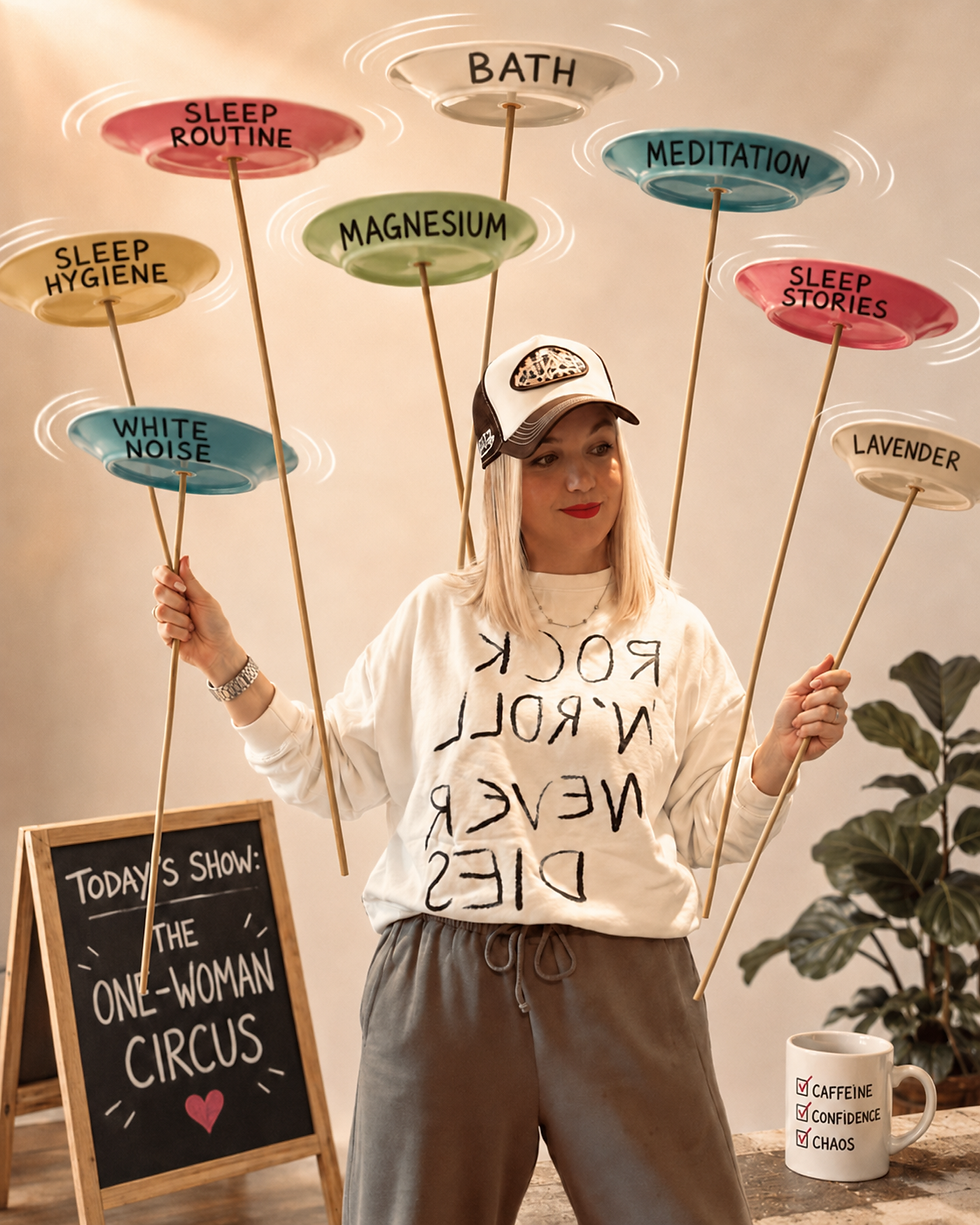
Most of the people I work with are high-functioning, capable, driven adults. They’ve applied the same approach to sleep that works for everything else in their lives. Try harder. Be more disciplined. Find the right system. Follow it consistently.
And it hasn’t worked. Not because they’re doing it wrong, but because effort is the wrong tool for this particular job.
Your Body hasn’t Forgotten
Here’s the thing I want you to hold onto.
Your body knows how to sleep in the same way it knows how to breathe, heal a cut, keep your heart beating without you thinking about it. These are biological imperatives. Your body is not going to give up on them.
What’s happened is that something got in the way.
The anxiety, the hyperarousal, the nervous system that learned to stay alert at night, the habits that were built out of fear.
The system got stuck.
That’s a system problem. Not a you problem.
CBT-I, which is the evidence-based approach I use, isn’t therapy in the traditional sense. It’s closer to physiotherapy.
You’re not processing emotions or unpacking your childhood. You’re retraining a system that learned the wrong thing, and teaching your body to do what it already knows how to do.
The work isn’t hard.
What makes it hard is not knowing what you’re dealing with.
Once you understand the system, the panic starts to dissolve. And when the panic dissolves, sleep comes back.
Where to Start
The Sleep Strategy Session is where I start with every adult client.
One session. Forty-five minutes. We look at your whole sleep system, not just your bedtime routine, and I identify the specific lever that’s keeping you stuck.
Not a generic programme.
Not a list of sleep hygiene tips you’ve already tried.
The actual root cause, specific to you, and what to do about it.
Most clients tell me it’s the first time sleep has ever been properly explained to them. That understanding alone shifts something.
You’re not broken. Your sleep system got stuck. Sleep will always, always find you.
Kerry x


Comments