

Can't Sleep? Why More Sleep Advice Is Making It Worse | The Sleep Fixer

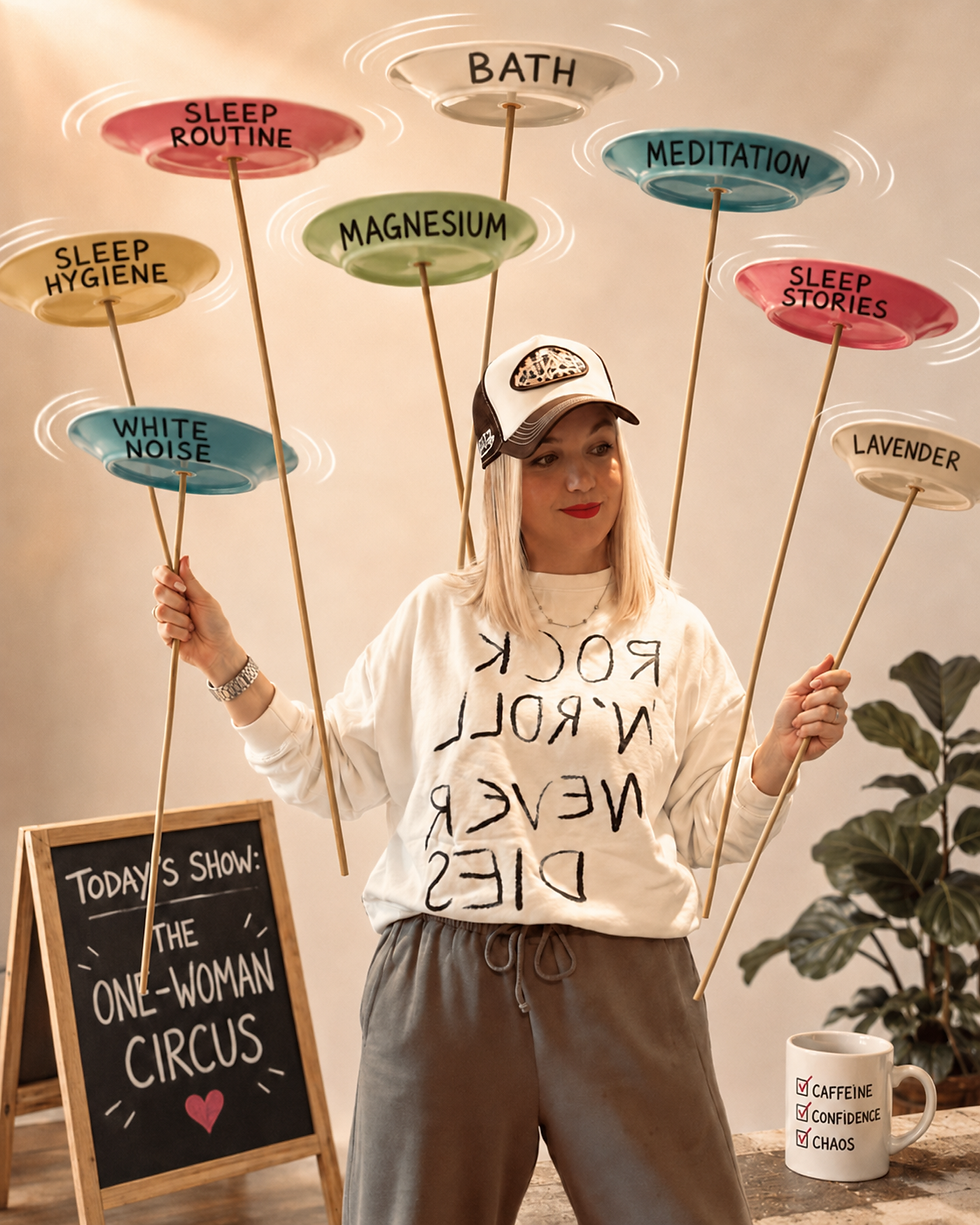
Fifteen years in the sleep space.
And I have never seen so much noise about sleep.
Track your sleep. Optimise your sleep. If you sleep for this long, this happens to your body. If you sleep for that long, something else happens. Avoid this. Do that. Buy this. Measure that. Must be asleep before midnight. Must hit eight hours. Must do it perfectly.
And if you can't sleep and you're reading this exhausted, I want to say something to you directly.
You do not need any of it.
The people consuming this content are already struggling
The people who are going to read that information, the tracking data, the mechanisms, the consequences of not sleeping perfectly, are not the people who sleep fine.
They are the people who can't sleep. Who are already knackered. Already lying awake worrying. Already ashamed. Already convinced something is wrong with them. Already isolated and afraid and hyperfocused on every hour they are or aren't sleeping.
Sleep deprivation already carries so much with it. The exhaustion is the obvious part. But underneath that sits shame. The quiet, heavy feeling of not being able to do something that seems effortless for everyone else. Hopelessness. Isolation. The fear that this is just who you are now.
And then we hand those people more pressure. More rules. More fear. More noise.
I spend a significant part of my work helping people step back from everything they have consumed online about sleep before we even begin to look at what is actually going on. People arrive to work with me already loaded down. Terrified they are damaging themselves because they woke at 3am, or because their tracker said they only hit light sleep, or because someone online explained in detail what sleep deprivation does to the body and now they cannot stop thinking about it at 2am while they are wide awake.
Half of the work I do before we even look at the sleep itself is helping people put that weight down.
Half the work.
What your brain is actually doing when you can't sleep at night
Here is something worth understanding, because it changes things.
You wake in the night and a thought arrives. Something that felt manageable yesterday suddenly feels enormous. Catastrophic, even. By morning you look back and wonder what all the fuss was about.
This is not anxiety spiralling out of control. It is not weakness. It is not a sign that your life is falling apart.
It is biology.
When you wake in the night, the prefrontal cortex, the part of the brain responsible for perspective, rationalisation, and problem-solving, is compromised. The problem has not changed. Your brain's capacity to put it in proportion has.
Understanding this matters, because so many people I work with have spent years believing that their 2am thinking tells them something true. It does not. It tells them something true about what happens to the brain during sleep disruption. And once you understand that, the spiral starts to lose its grip.
Why the sleep advice you've already tried hasn't worked
If you can't sleep and you've been struggling for any length of time, chances are you have already done the things you are supposed to do.
The bedtime routine. The sleep hygiene checklist. The consistent wake-up time. The right pillow, the right temperature, the wind-down practice.
And you are still exhausted.
That is not a failure of effort. It is a failure of the advice, or rather, a failure of the advice to be the right advice for you specifically.
Generalised sleep advice works for some people. But for those with a genuine sleep problem, it often isn't the right lever. And pulling the wrong lever, again and again, does not just fail to help. It compounds the hopelessness. It reinforces the belief that you are somehow beyond fixing.
You are not.
The two biggest biological drivers of sleep are sleep pressure and circadian rhythm. Sleep pressure is the drive to sleep that builds the longer you are awake. Circadian rhythm is your body's internal clock, anchored not by a fixed bedtime, but by a consistent wake time, light exposure, and the architecture of your day.
For most people who can't sleep, understanding and working with those two levers is the most powerful starting point. Not a new routine. Not another supplement. Not more information about what sleep deprivation is doing to your body.
The right lever. For you. Based on your biology, your patterns, your life.
Your body has not forgotten how to sleep
This is the thing I come back to again and again in my work.
Sleep is a biological human necessity. The same as breathing. The same as eating. The same as drinking water. Your body knows how to do this in the same way it knows how to heal a cut, regulate your temperature, keep your heart beating without you thinking about it.
You do not need to understand every mechanism happening inside you to trust that your body is working for you. You never have with anything else. Sleep is no different.
We are not supposed to need a manual for it.
And yet somewhere along the way, the conversation about sleep stopped being about supporting people and started being about overwhelming them. Short videos. Hooks. Half-explanations cut off before the part that would actually make sense of it all. Incomplete information that does not create understanding. It creates fear.
The kindest, most evidence-based thing I can offer many of the people I work with is also the simplest.
Stop monitoring so closely. Stop consuming the noise. Your body knows what to do and it will do it, if you get out of its way.
What becomes possible when you stop fighting your sleep
Here is what I want you to picture.
Your alarm goes off. And you just get up. No bargaining with yourself. No exhaustion hangover. No dread of the day ahead. You go about your morning without giving sleep a second thought.
I know that might feel a long way from where you are right now.
But this is what becomes possible when you find the right lever for your sleep. And when my clients get there, they never describe it in dramatic terms. It is always quieter than that.
I feel like myself again. I am not snapping at people. My brain does not feel foggy.
That is not a coincidence. That is what happens when the sleep system starts working the way it is supposed to.
Where to start if you can't sleep
If any of this has landed for you, there are two ways I can help.
The first is Kerry AI, a free, private tool trained exclusively on my methodology. You can start understanding your sleep right now, without anyone else needing to know, without a waiting list, without any pressure.
The second is a Sleep Strategy Session with me directly. One focused session for £97 to understand exactly what is driving your sleep difficulty and what to do about it. Real answers, not generalised advice.
You are not broken. Your sleep system got stuck. And once you understand why, it changes.
Sleep will always, always find you.


Comments